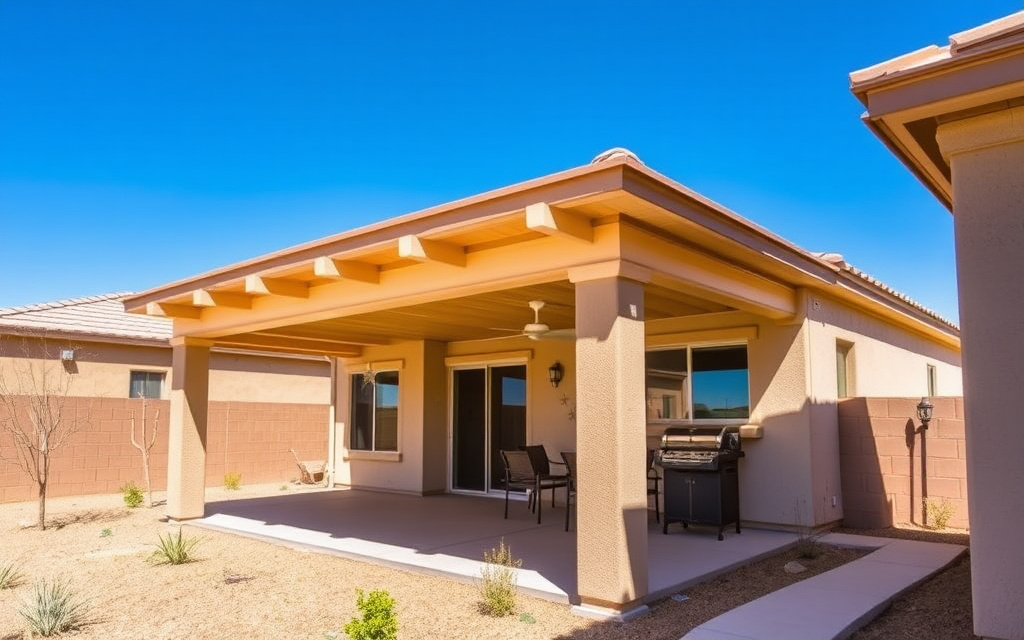
Every summer in the East Valley, the same thing happens. A monsoon storm rolls through, and the next morning neighborhood feeds fill with photos of patio covers folded over, shade sails wrapped around a fence, and pergolas that used to be attached to a house. Almost none of those failures were bad luck — they were structures never engineered for what a Phoenix monsoon actually does.
If you're investing in a backyard structure, this is the question that matters most: what monsoon wind rating patio cover Arizona conditions require — and how do you know a builder is meeting it?
What a Phoenix Monsoon Actually Does
"Monsoon" sounds like rain, but the real threat is wind. From roughly July through September, the valley gets hit by storms that punch far above a normal gusty afternoon:
- Microbursts. Sudden, concentrated downdrafts that slam straight down and blast outward across the ground. Brief but violent — the classic cause of a cover that was fine one minute and destroyed the next.
- 60–70+ mph gusts. Monsoon microbursts routinely gust in this range and sometimes higher. That's the load your structure has to survive, not the calm-day average.
- Uplift. Wind flowing over a solid roof creates lift, the same force that gets an airplane off the ground. A solid cover doesn't just get pushed sideways; it gets pulled up, straining every connection and footing.
- Driven rain. Wind pushes rain sideways and saturates the soil around footings right when the wind loads peak.
A structure that ignores any one of these — especially uplift — is waiting to fail.
How Structures Are Actually Rated
A wind rating isn't a sticker. It's the result of engineering the whole system so every part carries the load from the roof down into the ground — and the chain is only as strong as its weakest link:
- Wind load. The lateral (sideways) force the frame must resist, based on local code wind speeds for the Phoenix area.
- Uplift load. The upward pull on a solid roof, which drives how the roof is fastened and how the posts are anchored down.
- Footings. In Chandler, patio-cover posts require a footing that's a minimum of 18 inches square and 12 inches below grade per the city's Homeowner's Building Permit Manual. That mass keeps the posts from lifting or tipping in a gust.
- Post embedment. How deep and securely the posts tie into those footings. Shallow or poorly anchored posts are a top failure point.
- Connections. The brackets, bolts, and fasteners tying rafters to beams, beams to posts, and the whole assembly to your house. Storms find the weakest connection first.
Here's a quick reference for common structure types in our climate:
| Structure Type | Typical Wind Rating | Monsoon Notes |
|---|---|---|
| Shade sail (engineered) | ~85 mph | Needs reinforced posts + correct tensioning; DIY versions fail |
| Open pergola | ~50–70 mph | Open frame sheds wind well; connections still matter |
| Solid patio cover | Engineered to code + uplift | Uplift is the key load; footings and fasteners critical |
| Louvered roof | Engineered to code + uplift | Blades open to reduce load; frame still fully engineered |
The number on a brochure is meaningless without the footings and connections to back it up — that's the difference between a rating and a hope.
Shade Sails in the Monsoon
Shade sails are the structure people most often get wrong — and the most common monsoon casualty. Done right, they're a great, modern way to shade a pool, play area, or courtyard. Done wrong, they're this summer's cleanup project. The facts for Arizona:
- Rating. A properly engineered sail is typically rated to around 85 mph — plenty for our monsoon, if it's installed correctly.
- Lifespan. Quality UV-stabilized HDPE fabric lasts roughly 5 years in full Arizona sun before it fades and stretches. The fabric is replaceable; the posts and hardware last far longer.
- Tensioning is everything. A loose sail billows in the wind, pools rainwater, and tears itself — or its anchors — apart.
Why do DIY sails fail almost every time? Posts set in undersized footings that pull out under load, hardware rated for a backyard hammock rather than 85 mph tension, and sails hung loose enough to catch wind like a parachute. The failure you see online is almost never the fabric's fault — it's the anchoring. Reinforced posts, proper footings, and correct tension hardware are what separate a sail that lasts from one that doesn't.
Solid Covers and Louvered Roofs
Solid covers and louvered roofs face the toughest wind challenge because they present a full surface to the storm — which means uplift is the governing load. Surviving the monsoon comes down to:
- Engineered, stamped plans where Chandler requires them — especially for attached covers and anything with electrical (fans, lights, outlets).
- The 18" × 12" footings that give the posts the mass to resist uplift and overturning.
- Uplift-rated connections tying the roof down through the posts and into those footings, so wind can't peel the roof off.
- Correct attachment to the house for attached covers, so a gust can't pull the ledger away from your fascia.
- Louvered roofs get a small assist — open the blades and wind passes through — but the frame is still fully engineered to code.
This is exactly why a permitted custom build beats an unengineered big-box kit. Kits are sized for mild climates, rarely include engineered footings, and often aren't permit-ready for Chandler's wind and setback requirements. The permit and engineering aren't red tape — they're what makes the structure survive.
How to Spec a Structure That Lasts 20+ Years
You don't need an engineering degree to protect yourself — you need to ask the right questions and expect real answers. Here's your checklist for any builder:
- "Will this be engineered and permitted for Chandler wind loads?" The right answer is yes, with stamped plans where the city requires them.
- "What size are the footings?" You want at least the 18" square × 12" deep Chandler minimum — deeper for tall or freestanding structures.
- "How are the posts anchored, and how do you handle uplift?" A vague answer is a red flag.
- "What's the connection hardware rated for?" Especially for shade sails, the hardware and tensioning are the whole ballgame.
- "Do you pull the permit and handle the inspection?" A builder confident in their engineering welcomes the inspection.
Spec it right, and a properly engineered aluminum, Alumawood, steel, or louvered structure will shrug off monsoon after monsoon for decades. Spec it wrong, and you'll be shopping again next August.
Frequently Asked Questions
How strong are Phoenix monsoon winds? Monsoon microbursts routinely gust 60–70 mph and sometimes higher, hitting suddenly and blasting outward across the ground. Combined with uplift on solid roofs, that's the load a backyard structure has to survive — which is why engineered footings and connections matter so much.
What wind rating do shade sails have in Arizona? A properly engineered shade sail is typically rated to around 85 mph, which handles our monsoon well when it's anchored to reinforced posts and correctly tensioned. Most sail failures are under-anchored DIY installs or loose sails that billow and pool water, not fabric that gave out.
What footing does Chandler require for a patio cover? Per Chandler's Homeowner's Building Permit Manual, patio-cover posts need a footing at least 18 inches square and 12 inches below grade, with rafters sized to the code tables. Those footings are also what let the structure resist monsoon uplift.
Why do kit covers fail in the monsoon more than custom builds? Big-box kits are engineered for mild climates, rarely include proper footings, and often aren't permit-ready for Chandler's wind and setback rules. A custom build is engineered for our monsoon loads, anchored with code-compliant footings, and inspected.
Build It Once, Build It Right
The structures that survive twenty monsoons aren't lucky — they're engineered. If you want a pergola, patio cover, louvered roof, or shade sail that can take everything a Phoenix summer throws at it, start with a free design consultation. We'll assess your site, spec engineered footings and connections, handle the Chandler permit and inspection, and give you a firm quote.
We build monsoon-rated structures across Chandler, Gilbert, Mesa, Queen Creek, and Tempe. Call 844-967-5247 to schedule your free consultation and get a structure built to outlast the storms.