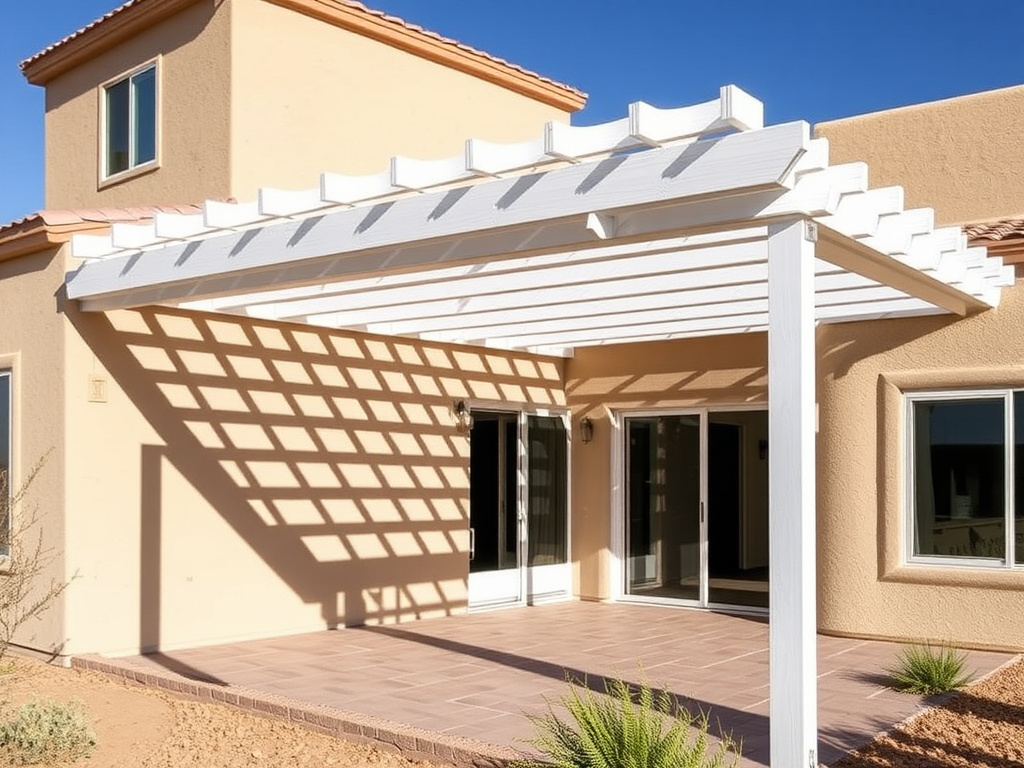
Alumawood & Aluminum Patio Covers in Chandler — The Zero-Maintenance Shade Standard
Alumawood has become the default patio-cover material across the East Valley, and for good reason: it delivers the warm look of painted wood with none of the desert maintenance. Built from embossed, powder-coated, insulated aluminum, it will not crack, warp, rot, or feed termites, and its factory finish shrugs off the Arizona sun. We build it in lattice, solid, and insulated styles.
What's Included
- Embossed, powder-coated insulated aluminum framing
- Lattice, solid and insulated-roof styles
- Wood-grain textures and a range of factory colors
- Cooler-running insulated panel options
- Manufacturer finish warranty
- Rustproof, termite-proof, no re-staining ever
What Alumawood actually is (embossed, powder-coated, insulated aluminum)
Alumawood is a brand name that has become shorthand for a whole category of patio cover, so it is worth explaining what you are actually getting. At its core it is aluminum, extruded into hollow beams and rafters, then finished in a few steps that turn a plain metal profile into something that reads as wood.
First, the aluminum surface is embossed with a wood-grain texture, so up close and from the patio it has the look and feel of milled lumber rather than smooth metal. Then it is powder-coated, a process where a dry pigment is applied and baked on to form a hard, uniform finish that bonds to the aluminum far better than paint on wood ever could. That baked finish is what resists the UV fade that wrecks stained wood in the desert.
The profiles are also hollow, and the roof panels are foam-insulated, which matters more in Arizona than almost anywhere. That hollow, insulated construction means the underside of an Alumawood cover runs cooler than solid metal, because the air gap and foam slow the heat coming through.
Put it together and Alumawood gives you the appearance of a wood patio cover with the physical properties of aluminum: it does not absorb moisture, so it will not swell, crack, split, or rot, and it gives termites nothing to eat. For a material that lives outdoors through 115 degree summers and monsoon humidity, that combination is exactly why East Valley builders reach for it first.
Alumawood vs. real wood vs. solid aluminum — heat, fade and maintenance
Homeowners usually weigh three materials for a cover, so here is how they stack up in our climate across the things that actually matter: heat, fade, and maintenance.
Real wood is the traditional look and the lowest up-front cost, and nothing quite matches genuine timber grain. But in Arizona wood is a commitment. The sun fades it, the heat-to-humidity swing cracks and warps it, termites are a real threat, and it needs re-staining every two to three years to hold up. Many East Valley homeowners who go with wood regret the upkeep within a few summers.
Solid aluminum is the strong, simple option. It is rustproof and low-maintenance like Alumawood, but a single-skin solid aluminum panel with no insulation soaks up sun and runs hot on the underside, and it has a plainer, more industrial look than the wood-grain texture people usually want over a living space.
Alumawood sits in the middle in the best way. It has the wood-grain look, the rustproof and termite-proof durability of aluminum, and, because the profiles are hollow and the panels can be insulated, it runs cooler underneath than plain solid metal. It never needs re-staining, and the powder-coat finish holds its color for decades.
For most residential patios in Chandler and the surrounding East Valley, Alumawood is the sweet spot: it looks like the wood cover you want without any of the maintenance the desert would demand of actual wood. We still build in wood or solid aluminum when a project calls for it, but Alumawood is what we recommend most often.
Does Alumawood get hot? Insulated vs. non-insulated panels
It is the first question we get about Alumawood, and the honest answer is yes and no. Like anything sitting in direct Arizona sun, the top surface of the cover warms up, that is unavoidable. What matters for your comfort is the temperature underneath, at the patio, and that is where Alumawood pulls ahead of solid metal.
The reason comes down to construction. Alumawood profiles are hollow, and the roof panels are foam-insulated, so there is an air gap and a layer of foam between the hot top skin and the underside. That barrier slows the radiant heat trying to pass through, so the ceiling over your patio stays noticeably cooler than a single-skin aluminum or steel panel that transmits heat straight through.
There is a real difference between insulated and non-insulated panels here, and it is worth understanding before you choose. A standard non-insulated Alumawood roof already runs cooler than solid metal thanks to the hollow profiles, and it is plenty for filtered-shade and lattice applications. An insulated roof panel, with a dedicated foam core sandwiched between two aluminum skins, blocks substantially more radiant heat and is the choice when you want the patio to stay comfortable through the worst of July and August.
Our rule of thumb: if the cover faces west or south and takes the full afternoon sun, or if you plan to use the patio hard through the summer, step up to insulated panels. For a shaded exposure or a filtered-light lattice, standard Alumawood is often all you need. We will point you to the right one for how your patio actually sits.
Colors, wood-grain textures, styles and warranty
One of the quiet advantages of Alumawood is how many looks it comes in, so the cover fits your house instead of standing out from it. The factory finish is available in a broad range of colors, from warm desert tans and adobe tones to crisp whites and deep browns, and we match to your home's trim, fascia, and roof so the addition looks planned.
The wood-grain texture is embossed into the material itself, so from the patio it genuinely reads as painted wood rather than metal, without any of the grain fading or checking that real wood shows after a couple of Arizona summers. If you prefer a cleaner, more contemporary look, smooth profiles are available too.
Styles cover the full range. A lattice Alumawood cover gives you filtered shade and an open, airy feel. A solid roof gives you full, consistent shade and light rain runoff. An insulated roof adds the foam core for the coolest patio and a finished ceiling ready for recessed lighting and fans. We can also combine styles, for instance a solid cover over the dining area flowing into a lattice section over a walkway.
Because Alumawood is a manufactured system, it carries a manufacturer finish warranty against the kind of fade, chalk, and peel that a can of wood stain never protected you from in the first place. Combined with our workmanship, that means the cover you buy looks the way it did on install day for many years, with no sanding, staining, or sealing on your calendar.
Pricing and why it beats a wood cover over 10 years
Alumawood covers price out in the same range as other quality patio covers: standard lattice and solid Alumawood roofs typically start around 25 dollars per square foot installed, while insulated Alumawood roof panels run up to roughly 40 dollars per square foot. You will see big-box Alumawood kits advertised for far less, around 13 to 18 dollars per square foot for materials alone, but those numbers leave out engineered footings, the permit, the attachment, and the labor, and the kits are sized for mild climates rather than Chandler's setback and monsoon-wind requirements.
The real case for Alumawood shows up when you look at the full 10-year cost of owning the cover, not just the day-one price. A wood cover might come in a little cheaper to build, but then the meter starts running: re-staining every two to three years in materials and labor or your own weekends, plus repairs for cracking, warping, and any termite damage the desert serves up. Over a decade those recurring costs stack up fast, and the cover still looks tired.
Alumawood has essentially none of that. There is no staining, no sealing, no sanding, and nothing for termites to eat. You wash it off now and then, and the powder-coat finish holds its color under warranty. So while the up-front numbers can look close, the 10-year math favors Alumawood clearly once you count everything a wood cover asks of you along the way.
We will lay out a firm, itemized quote after a free on-site measure so you can compare real numbers. Call 844-967-5247 to get started.
Alumawood & Aluminum Covers — Common Questions
Ready to Design Your Alumawood & Aluminum Covers?
Book a free on-site design consultation — we handle the permits, HOA approval and engineering.