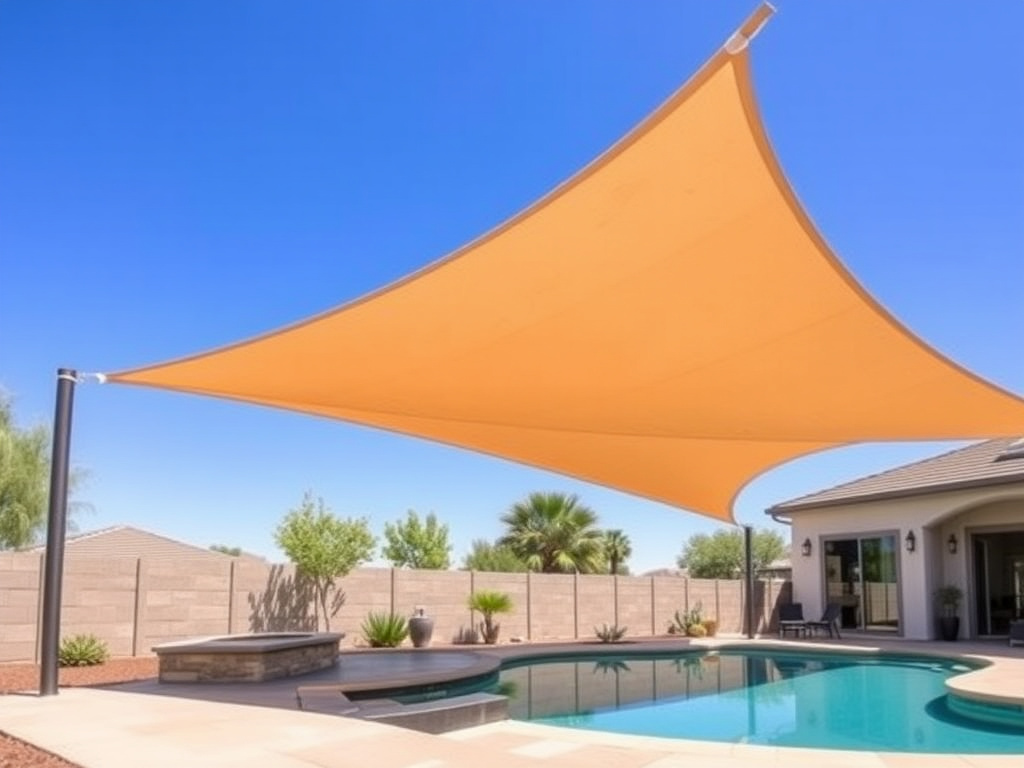
Shade Sails & Sun Shades in Chandler, AZ — Fast, Modern, Budget-Friendly Shade
Shade sails are a modern, budget-friendly way to throw cool shade over a pool, patio, play area, or courtyard without building a full roof. Engineered and tensioned correctly, they handle Arizona sun and monsoon winds and give your yard a clean, architectural look. We install professionally anchored sails across the East Valley. Call 844-967-5247.
What's Included
- UV-stabilized HDPE sail fabric
- Engineered, reinforced anchor posts
- Correct tensioning hardware
- Monsoon-rated wind design
- Single or overlapping-sail layouts
- Color selection and fabric replacement
When a shade sail is the right call
Shade sails, pergolas, and patio covers all fight the same enemy, the Arizona sun, but they suit different situations. A sail is a tensioned fabric triangle or square stretched between anchor points. It is the lightest, fastest, and most affordable way to cover a space, and it brings a clean, modern look that many homeowners love.
Choose a sail when you want to shade a large or oddly shaped area, a pool, a play zone, a carport, or a courtyard, without committing to posts, beams, and a solid roof everywhere. Sails cut UV and glare and drop the temperature underneath, and their overlapping layouts create striking visual interest that a flat roof cannot. Because they mount to slim posts or existing structure, they also keep the ground below open and uncluttered.
- Shade sail: lowest cost, fast install, modern look, filtered shade, replaceable fabric.
- Pergola: permanent frame, filtered or louvered shade, adds structure and value.
- Patio cover: solid roof, full shade, coolest option, higher cost.
Where a sail falls short is total heat blocking and rain. Fabric lets more heat through than an insulated solid roof and is not designed to keep you dry in a downpour. If your priority is an all-day, fully shaded, weatherproof room, a cover or ramada is the better fit. If you want affordable, stylish shade over a big footprint, and you are comfortable planning for a fabric refresh every few years, a sail is hard to beat. We are happy to spec a sail on its own or combine one with a solid cover elsewhere in the yard so each area gets the right kind of shade.
HDPE fabric, UV rating, and real lifespan
Quality shade sails use knitted HDPE, high-density polyethylene, fabric that is UV-stabilized and engineered to block a high percentage of harmful rays while still breathing to let hot air escape. That breathability is a feature in our climate: it keeps the space below cooler than a sealed material would by allowing heat to vent through the weave rather than trapping it against the fabric.
Be realistic about lifespan, though. In full Arizona exposure, even a good UV-stabilized HDPE sail generally lasts around five years before the fabric begins to fade and stretch. The relentless sun that makes shade so valuable here is also what slowly breaks down any fabric. We are upfront about this so you can plan for it rather than be surprised by it.
The key is to treat the fabric as a replaceable component, not a lifetime finish. The posts, footings, and tension hardware we install are built to last far longer, so when the fabric eventually needs swapping, you are only replacing the sail itself, not rebuilding the whole system. That makes a professionally anchored sail an affordable long-term shade solution, with a modest refresh every few years to keep it looking crisp and taut. We size and place the posts at install so that future re-skins drop right in without any new drilling or concrete work.
Monsoon wind ratings, tensioning, and anchoring
The number one question we get about sails is whether they survive our monsoons, and the honest answer is that it comes down entirely to how they are installed. Properly engineered shade sails are typically rated to around 85 mph. When they are anchored to reinforced posts and correctly tensioned, they hold up well through monsoon season, even as Phoenix microbursts gust past 60 to 70 mph.
The failures you hear about are almost always under-anchored DIY jobs. A sail attached to a fence, a fascia board, or an undersized post has nothing to fight the wind, and a sail left loose enough to billow or pool rainwater turns into a giant fabric parachute in a storm. Tension and anchoring are not details, they are the whole game.
That is why we set proper footings, use reinforced steel or engineered posts sized for the load, and dial in the correct tension across every corner so the sail stays taut and sheds wind cleanly. Correct tensioning also keeps the fabric from stretching prematurely, so it looks better and lasts closer to its full life. We also angle the sail so rain runs off cleanly instead of collecting in a low pocket, which is one of the most common reasons a poorly installed sail tears loose in a storm. When a sail is engineered and installed the right way, monsoon season is not something to fear.
Pool, play-area, carport, and courtyard uses
Pools are the classic shade-sail application. A sail stretched over part of the deck or the shallow end gives swimmers relief from direct sun and keeps the surrounding surfaces cooler underfoot, all without the visual bulk of a solid roof next to the water. The airy, sculptural look also suits a resort-style backyard.
Play areas are another favorite, especially for families who want to keep kids and equipment out of the harshest sun. A sail over a swing set, trampoline, or turf play space dramatically cuts UV exposure and surface temperatures, making the yard usable for far more of the day through our long summers. Shaded artificial turf and playground surfaces in particular run far cooler underfoot, which matters when synthetic surfaces can get too hot to touch in direct desert sun.
Carports and courtyards round out the list. A sail over a driveway or parking pad shades vehicles and cuts interior heat soak, while a courtyard sail turns a hot entry or side yard into a comfortable transitional space. Because sails can span large or irregular footprints and mount at varied heights and angles, they adapt to spots where a rigid cover simply would not fit. We tailor the layout to your yard, sun angles, and the specific area you want to protect.
Colors, overlapping designs, and maintenance
One of the joys of shade sails is the design freedom. HDPE fabric comes in a wide range of colors, from desert-neutral tans and greys to bold accents, so you can blend the sails into your home's palette or make them a statement. Darker colors tend to read as more dramatic, while lighter tones can feel cooler and more open.
The real design magic is in overlapping, multi-sail layouts. By mounting several sails at different heights and angles, we create depth, movement, and continuous coverage across a large area, while the staggered edges let hot air escape between panels. It is a look that flat roofs and simple covers cannot match, and it lets us shape shade around pools, patios, and play zones with precision.
Maintenance is refreshingly light. HDPE sails shed dust and rinse clean with a hose, and the main upkeep is periodic re-tensioning to keep them taut as the fabric relaxes over time. Plan on eventual fabric replacement around the five-year mark in full sun. Because the posts and hardware stay put, re-skinning a sail is quick and affordable, and it is a good moment to freshen the color or adjust the layout if your yard has changed. A quick seasonal rinse and a check of the tension is really all it takes to keep a sail performing between refreshes, and we are glad to handle that upkeep for you if you would rather not climb a ladder. Call 844-967-5247 and we will design a sail layout built for your yard and our climate.
Shade Sails & Sun Shades — Common Questions
Ready to Design Your Shade Sails & Sun Shades?
Book a free on-site design consultation — we handle the permits, HOA approval and engineering.