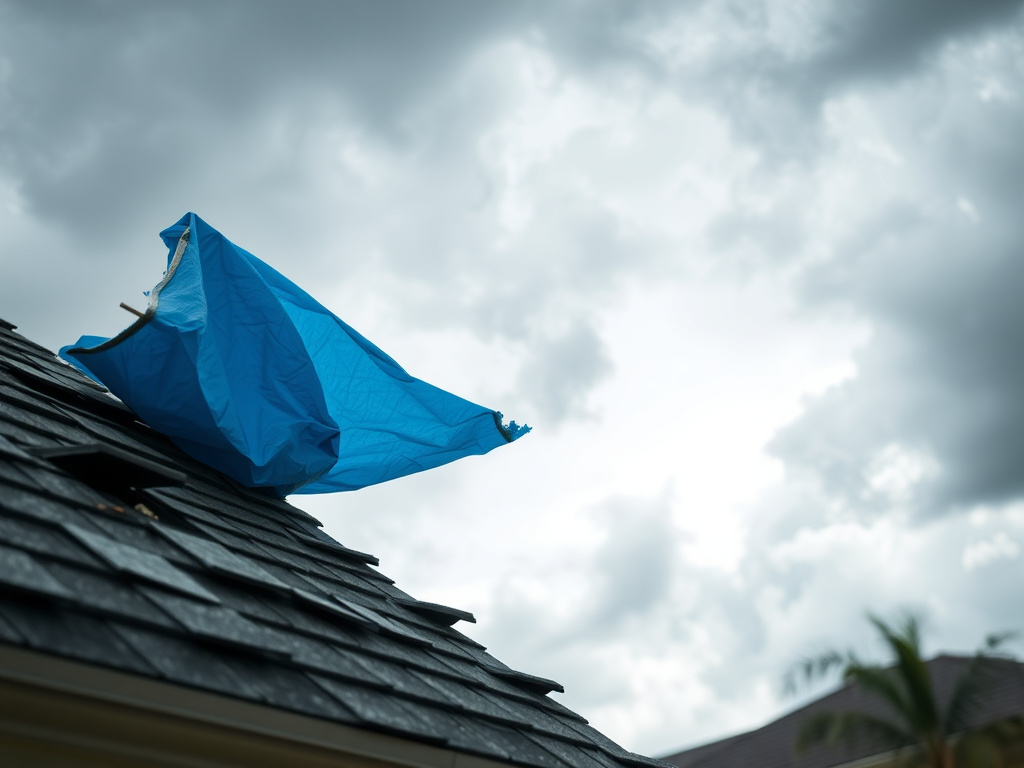
When a hurricane or tropical storm damages your roof in Daytona Beach, the hours and days immediately following are critical. What you do — and what you avoid doing — in that window significantly affects whether your insurance claim is approved, how much you receive, and how quickly your roof gets repaired.
This guide walks Florida homeowners through the storm damage insurance claim process from start to finish.
Step 1: Stay Safe — Don't Inspect the Roof Yourself
After a storm, resist the urge to climb on your roof to assess damage. Wet roofs, wind-shifted materials, and debris create serious fall hazards. Structural damage that isn't visible from the ground can make sections of the roof unsafe.
Wait until a licensed roofing contractor can safely assess your roof. This is what we do — call us at 844-967-5247 and we'll get there as quickly as possible.
Step 2: Document What You Can See From the Ground
Before anyone arrives, document visible damage from the ground and from inside your home:
- Photograph missing shingles or visible gaps in the roof from the ground
- Photograph water stains on ceilings and walls (with timestamps if possible)
- Photograph any damage to gutters, soffits, fascia, and HVAC equipment
- Note the date and time of the storm and any significant weather events
Do not attempt to document damage from the roof — wait for a professional.
Step 3: Prevent Further Damage (Without Making Permanent Repairs)
Your insurance policy typically requires you to mitigate further damage after a loss. This means you can and should take temporary protective measures — but you should not make permanent repairs before the insurance adjuster inspects the damage.
Acceptable temporary measures:
- Install a tarp over damaged areas to prevent water intrusion (or have a contractor install one professionally)
- Move valuables away from areas with active leaks
- Place buckets or towels to collect dripping water
What to avoid:
- Replacing shingles or doing permanent repairs before the adjuster's inspection
- Having any roofing work done before filing your claim
- Throwing away damaged materials — save them for the adjuster to inspect
Licensed contractors like us can install emergency tarps professionally — properly weighted and secured — without making permanent repairs. Insurance typically covers emergency tarping as part of a storm damage claim.
Step 4: Call Your Insurance Company to Report the Damage
Contact your insurance company as soon as possible after the storm to report the damage and open a claim. Florida law sets deadlines for reporting storm damage — most policies require prompt notification, and the state has requirements around claim filing deadlines.
When you call:
- Have your policy number ready
- Give a brief description of the damage you've observed
- Ask about the claims process and expected timeline for adjuster assignment
- Ask about your deductible — Florida policies often have separate, higher hurricane deductibles
Step 5: Get a Professional Roof Inspection and Documentation
Before the adjuster visits, get a licensed roofing contractor to inspect your roof and provide written documentation of all damage. This serves several purposes:
- It gives you independent documentation if the adjuster misses or undervalues damage
- It helps you understand the full scope of what's damaged before you're in a negotiation with the insurer
- It provides the photo documentation and written assessment the adjuster needs
We provide this inspection and documentation at no charge. Having professional documentation when the adjuster arrives gives you a much stronger position.
Step 6: The Insurance Adjuster Inspection
The insurance company will send an adjuster to inspect the damage — either a company employee or an independent adjuster. A few important points:
You have the right to be present during the inspection. If possible, have your roofing contractor present as well to walk the adjuster through the documented damage.
Florida law gives you the right to choose your own contractor. Your insurer may suggest or even pressure you to use a specific contractor from their network. You are not required to do this. Contractors on insurance company networks are often selected for cost efficiency, not quality.
You can dispute the adjuster's estimate. If the adjuster's estimate is significantly less than the professional documentation of your damage, you have options including hiring a public adjuster, requesting a re-inspection, or invoking your policy's appraisal clause.
Step 7: Review the Adjuster's Estimate Carefully
When you receive the adjuster's written estimate, compare it to your contractor's documented damage assessment. Look for:
- Items the adjuster listed as excluded or non-covered
- Damage documented by your contractor that doesn't appear in the adjuster's estimate
- Depreciation applied to materials (you may be entitled to recover depreciation after repairs are complete under a Replacement Cost Value policy)
- Whether the estimate covers like-for-like replacement that meets current Florida Building Code
If there are significant gaps between the adjuster's estimate and the documented damage, discuss with your roofing contractor about next steps.
Step 8: Understand Your Policy and Deductibles
Florida homeowners insurance policies typically have:
- Standard deductible for most covered losses (often $500–$2,500)
- Hurricane deductible specifically for hurricane losses — often 2–5% of your home's insured value, which can be significantly larger than the standard deductible
The hurricane deductible applies when the storm causing your damage is a named hurricane. For tropical storms and severe thunderstorms, the standard deductible typically applies.
Make sure you understand which deductible applies to your claim before you're surprised by a large out-of-pocket cost.
Step 9: Signing Contracts With Your Roofing Contractor
Once your claim is approved, you'll sign a contract with your chosen roofing contractor. A few things to verify:
- The contractor is licensed in Florida (verify at the Florida Department of Business and Professional Regulation website)
- The contractor carries current general liability and workers' compensation insurance
- The contract specifies the exact materials to be used (manufacturer, product name, color)
- The contract specifies that a permit will be pulled and inspections completed
- The warranty terms for both materials and workmanship are in writing
Warning about Assignment of Benefits (AOB): Some contractors will ask you to sign an Assignment of Benefits form that transfers your claim rights to them. Florida has changed AOB laws significantly, and we recommend not signing any AOB without consulting with your insurer or an attorney. We work with your insurance company directly without requiring an AOB.
Step 10: The Repair or Replacement
After your claim is approved and you've signed a contract with a licensed contractor, the work is scheduled. Your contractor handles permitting, installation, and the final building inspection.
Keep all documentation from the project — the contractor's invoice, warranty documentation, permit records, and your claim settlement letter. You'll need these for future insurance renewals and any subsequent claims.
What If My Claim Is Denied?
If your claim is denied or significantly underpaid, you have options:
- Request a re-inspection with additional documentation
- Hire a public adjuster (a licensed professional who works on your behalf, not the insurance company's)
- Invoke your policy's appraisal process — most Florida policies have a dispute resolution mechanism
- Consult a Florida insurance attorney — some work on contingency for hurricane damage claims
Don't accept a denial without fully understanding the basis and exploring your options.
Getting Help in Daytona Beach
If your roof was damaged in a storm, we're here to help. We provide free inspections, professional damage documentation, emergency tarping, and licensed Florida roofing contractor services throughout Volusia County.
Call 844-967-5247 or request service online.