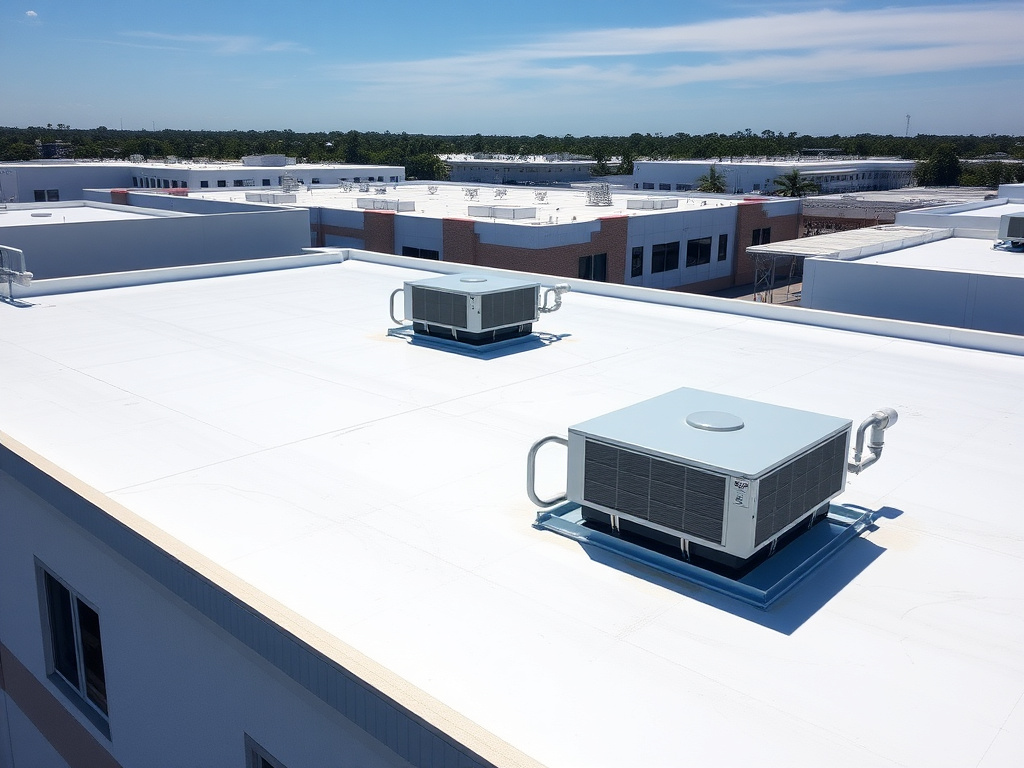
Flat Roof Installation & Repair — Daytona Beach Commercial & Residential
Flat and low-slope roofs require different materials, installation techniques, and maintenance than pitched roofs — and Florida's intense UV, rain, and heat create specific demands on flat roof systems. We install TPO, EPDM, and modified bitumen flat roofs for Daytona Beach residential additions, commercial properties, and Florida-style low-slope homes.
What's Included
- TPO (thermoplastic polyolefin) membrane systems
- EPDM (rubber) membrane systems
- Modified bitumen (torch-down) systems
- Proper slope and drainage engineering
- Mechanical fastening or fully adhered systems
- Florida Building Code-compliant installation
- Permit and building inspection
Flat Roof Systems for Florida's Climate
Flat roofs in Florida face a specific challenge: intense UV radiation, frequent heavy rainfall, and thermal cycling from high daytime temperatures to cooler nights cause roofing membranes to expand, contract, and age. Choosing the right system and installing it correctly is critical to avoiding premature failure.
We install three proven flat roof systems for Daytona Beach properties, each with different cost profiles, lifespans, and best-use cases. We'll recommend the right system for your building after a site assessment.
TPO Roofing — The Florida Favorite
TPO (thermoplastic polyolefin) is the most popular commercial and residential flat roofing choice in Florida for several reasons: it's white (reflects solar heat), the seams are heat-welded rather than adhesive-bonded (extremely strong and watertight), and it's highly resistant to UV degradation. TPO typically lasts 20–30 years in Florida's climate when properly installed.
For Florida building owners concerned about cooling costs, white TPO is an excellent choice — its solar reflectance can reduce cooling loads by 15–25% compared to dark roofing materials.
EPDM Roofing — Proven Rubber Membrane
EPDM (ethylene propylene diene terpolymer) is a proven synthetic rubber membrane that has been used on flat roofs for 50+ years. It's highly flexible, handles thermal movement well, and has excellent weather resistance. EPDM is available in black or white and is typically installed as a mechanically fastened or fully adhered system.
EPDM is an excellent choice for residential flat roof additions and smaller commercial applications. It typically lasts 20–30 years in Florida.
Modified Bitumen — Torch-Down Systems
Modified bitumen (mod bit or torch-down) is an asphalt-based membrane reinforced with polyester or fiberglass and modified with polymer compounds for flexibility. It's installed in multiple layers with a torch, hot mop, or cold adhesive. Modified bitumen is a mature, well-understood technology with a 10–20 year lifespan in Florida.
It's a cost-effective option for smaller flat roof areas and repairs to existing mod bit systems.
Flat Roofs — Common Questions
Get a Free Flat Roofs Inspection in Daytona Beach
Licensed Florida roofing contractor — free inspections, written estimates, and insurance claims handled for you.